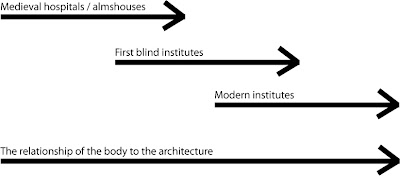
I found the book: The Blind in French Society from the Middle Ages to the Century of Louis Braille , by Zina Weygand and Emily-Jane Cohen. Like the title suggest, the book gives a overview of the developments of the blind in France. The chapters I could read so far described the image of the blind in de middle ages. He starts with explaining the number and the causes of blindness and he compares this with the present causes and numbers in third world countries. "Malnutrition , lack of hygiene and infectious diseases"(p.11) together with violence and accidents are causes for blindness. But also blindness was a punishment inflicted on thieves. From the church there was a believe that the blind were people which got punished for a sin they have done (or their parents).
All these causes brought forth a image of the blind that was especially negative.
"the lame and the blind ... are too lowly to be mentioned in front of good and honourable persons; if nature has refused them to this point and stigmatized them, it is because they have a sin expiate."(p.16)
This negative image was visible in theatres were the blind provoked laughter at their own expense. Blind people were there "to poke fun at them"(p.13)One play tells about a blind man and a young boy: The blind man wants a help and finds it in the form of a young boy. But the story turns in deception and the boy steals the saving money of the old man. This money was gathered by began. The old blind man used his disability to collect charity money from the rich, thus making him rich. When the play develops, the blind man shows more of his real nature, as a drinking lying man. This is why the audience doesn’t feel pity when the young boy steals the money of the blind man.
"The public, therefore, will not pity him when his valet strips him of his possessions, taking leave with these words, which express all the competent that could be had for blind beggars at that time."(p.14)
These were the condition the blind had to live in the medieval ages. But these times were not only this cruel. “the church demonstrated much more charitable behaviour towards them at the same time”.(p.17) The care of the (poor) blind, in these times, was done by the church. In hostels (and later on almshouses) the blind, together with people with other disability, the sick and the mentally ill, were taken care off. Religion used these hostels to cure the people in the name of god, which brought the blind to seek them out for forgiveness and salvation. This charity of the church was adopted by rich and wealthy in order “to show off their riches and grandeur” (p. 18), leading to the first institutions founded especially for the blind in the eleventh century. The first blind institute was the Quinze-Vingts (=300, stands for the number of beds available for the blind).
The negative view of the blind, of drunk and lying beggars, stayed for long. Until the humanist Juan-Luis Vivès wrote his theory about the fact that everyone who can work, must work. Vivès believes that even disabled people, like the blind, can work.
“Not even the blind shall be allowed to remain idle; there are many things they can do. Some have literary disposition, provided that someone read to them. Let them study, for we observe that a number of them make progress in erudition ... In sum, if they neither wish to be unemployed nor to flee work, they will easily find something to keep them self occupied. Laziness or indolence, and not a bodily defect, is the only excuse they may put forward for doing nothing.” (p.28)
By claiming “the law the lord imposed on all mankind”(p.29) Vivès makes the blind (and other disabled people) equal with healthy people. Seeing them as ‘a whole”(p.29). He was one of the first to claim this. The enlighment period which brought forth a rational worldview changed the negative image of the blind into a possibility to integrate into the ‘normal’ world.
Interesting is the image this book sketches of the church. At one hand the religion contributes to the negative image of the blind, by claiming that blindness is a punishment for a sin. At the other hand it is the church that provides shelter and care for the poor blind. He sketches this duality also for the charity houses of the rich and wealthy, which are for charity and for showing off wealth.
All these causes brought forth a image of the blind that was especially negative.
"the lame and the blind ... are too lowly to be mentioned in front of good and honourable persons; if nature has refused them to this point and stigmatized them, it is because they have a sin expiate."(p.16)
This negative image was visible in theatres were the blind provoked laughter at their own expense. Blind people were there "to poke fun at them"(p.13)One play tells about a blind man and a young boy: The blind man wants a help and finds it in the form of a young boy. But the story turns in deception and the boy steals the saving money of the old man. This money was gathered by began. The old blind man used his disability to collect charity money from the rich, thus making him rich. When the play develops, the blind man shows more of his real nature, as a drinking lying man. This is why the audience doesn’t feel pity when the young boy steals the money of the blind man.
"The public, therefore, will not pity him when his valet strips him of his possessions, taking leave with these words, which express all the competent that could be had for blind beggars at that time."(p.14)
These were the condition the blind had to live in the medieval ages. But these times were not only this cruel. “the church demonstrated much more charitable behaviour towards them at the same time”.(p.17) The care of the (poor) blind, in these times, was done by the church. In hostels (and later on almshouses) the blind, together with people with other disability, the sick and the mentally ill, were taken care off. Religion used these hostels to cure the people in the name of god, which brought the blind to seek them out for forgiveness and salvation. This charity of the church was adopted by rich and wealthy in order “to show off their riches and grandeur” (p. 18), leading to the first institutions founded especially for the blind in the eleventh century. The first blind institute was the Quinze-Vingts (=300, stands for the number of beds available for the blind).
The negative view of the blind, of drunk and lying beggars, stayed for long. Until the humanist Juan-Luis Vivès wrote his theory about the fact that everyone who can work, must work. Vivès believes that even disabled people, like the blind, can work.
“Not even the blind shall be allowed to remain idle; there are many things they can do. Some have literary disposition, provided that someone read to them. Let them study, for we observe that a number of them make progress in erudition ... In sum, if they neither wish to be unemployed nor to flee work, they will easily find something to keep them self occupied. Laziness or indolence, and not a bodily defect, is the only excuse they may put forward for doing nothing.” (p.28)
By claiming “the law the lord imposed on all mankind”(p.29) Vivès makes the blind (and other disabled people) equal with healthy people. Seeing them as ‘a whole”(p.29). He was one of the first to claim this. The enlighment period which brought forth a rational worldview changed the negative image of the blind into a possibility to integrate into the ‘normal’ world.
Interesting is the image this book sketches of the church. At one hand the religion contributes to the negative image of the blind, by claiming that blindness is a punishment for a sin. At the other hand it is the church that provides shelter and care for the poor blind. He sketches this duality also for the charity houses of the rich and wealthy, which are for charity and for showing off wealth.
The text self can be found in pdf form here